Happy birthday! msalamon.pl’s first year! + CONTEST
It happened. The first year since I started the blog has passed! This is a perfect opportunity to sum up what I managed to achieve over this year and what I plan for the coming year.
(more…)It happened. The first year since I started the blog has passed! This is a perfect opportunity to sum up what I managed to achieve over this year and what I plan for the coming year.
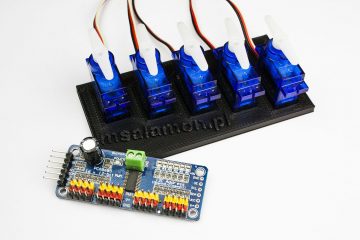
(more…)Model hobby servomechanisms, or servos for short, are a very interesting type of actuator. They move around an axis, similar to regular motors, except the rotation is not continuous. The mechanism rotates only by a “given angle.” In other words, with a servo you set the position in which it should be. Supplying voltage alone is not enough. A servo requires
(more…)Everyone was once a beginner. In the past, to acquire knowledge, you searched through libraries. Today, you search through Google. Since you found your way here, you’ve probably typed the phrase “How to start with STM32?” or something similar into a search engine at least once in your life. There is no
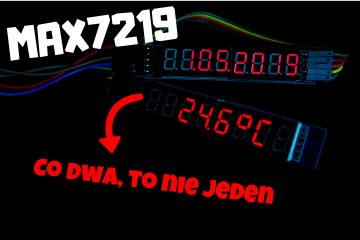
(more…)Recently we made a 7-segment display multiplex itself thanks to the magical MAX7219 chip. Today I’ll show you how these chips let you handle a theoretically infinite number of displays. We’re talking about the daisy-chain connection these wonderful chips offer. In a moment you’ll see how, without using more pins, you can connect and control as many displays as you want. Let’s get to it!
(more…)I remember how many years ago multiplexing an LED matrix was a nightmare for me. Geez… how badly I went through it. From today’s perspective I don’t understand my past self at all. It really isn’t as difficult as it seemed to me back then. Today it’s even simpler! We have specialized multiplexing chips designed for LED displays, and that’s beautiful. Let’s get cracking!
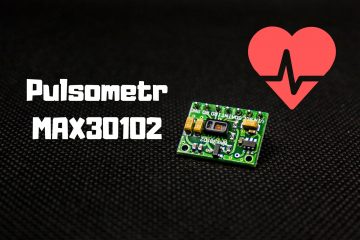
(more…)Probably every one of my readers has dealt with some wearable device, the so-called wearables. Even the simplest fitness bands have a built-in heart rate sensor that most often measures at the user’s wrist. It turns out this isn’t some mysterious technology available only to a closed group of consumer electronics manufacturers. Read more
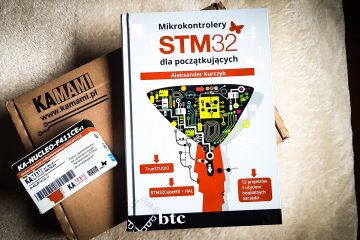
Some time ago, an interesting book “STM32 Microcontrollers for Beginners” from BTC Publishing appeared on the market. To my knowledge, this is the first widely released book that fully relies on the HAL libraries and is aimed at those who want to start their adventure with our favorite microcontrollers. For that reason, I was very curious to see what the author had to say.
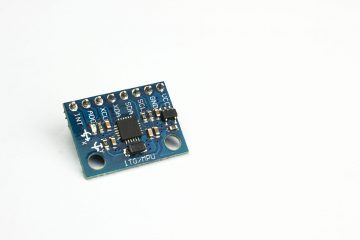
(more…)I remember when the Nokia N95 hit the market, which was a huge technological leap. It had a built-in accelerometer thanks to which, among other things, the interface would change orientation by itself. Today this probably doesn’t impress anyone anymore, but in 2007 an app with lightsaber sounds triggered by
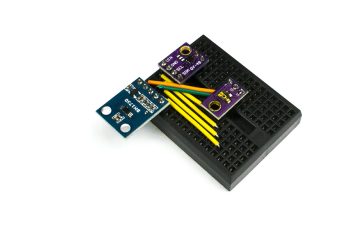
(more…)Measuring light intensity is common in our everyday life. Probably everyone has an auto dimming/brightening screen feature in their smartphone. It is based precisely on measuring the light intensity around the device. The measurement is performed continuously while the phone is unlocked. Today I will focus on how we can Read more