Opublikowano przez Mateusz Salamon, temu 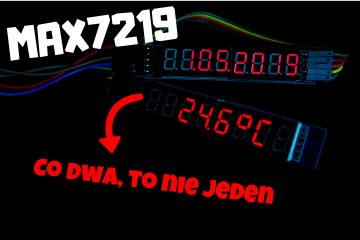
STM32
No More Multiplexing on GPIO! MAX7219 in Action, Part 2
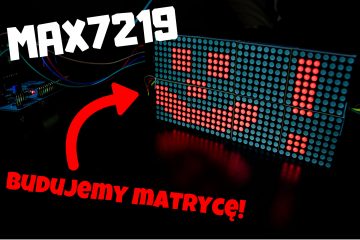
Recently we made a 7-segment display multiplex itself thanks to the magical MAX7219 chip. Today I’ll show you how these chips let you handle a theoretically infinite number of displays. We’re talking about the daisy-chain connection these wonderful chips offer. In a moment you’ll see how, without using more pins, you can connect and control as many displays as you want. Let’s get to it!
(more…)STM32
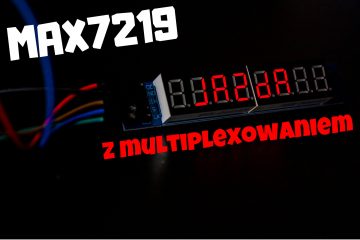
No More GPIO Multiplexing! MAX7219 in Action, Part 1
I remember how many years ago multiplexing an LED matrix was a nightmare for me. Geez… how badly I went through it. From today’s perspective I don’t understand my past self at all. It really isn’t as difficult as it seemed to me back then. Today it’s even simpler! We have specialized multiplexing chips designed for LED displays, and that’s beautiful. Let’s get cracking!
(more…)STM32
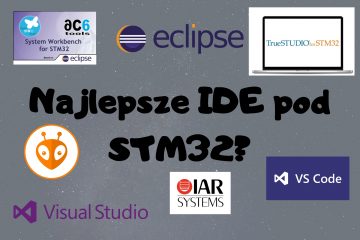
IDE or Not IDE – The 8 Best IDEs for STM32
Many beginners puzzle over what the best IDE for STM32 is. On the Internet, as is always the case, opinions are divided. Some will recommend an all-in-one tool costing thousands of dollars “because it’s the best and the others are junk.” Others will say that an IDE is an unnecessary tool and will send you to Notepad or something only slightly more advanced. There’s also a split between supporters of free and paid IDEs. So which is the best IDE for STM32? The answer isn’t simple… but
(more…)STM32
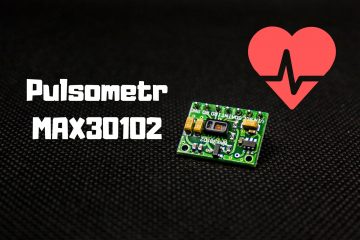
My Finger Is Pulsing!!! The MAX30102 Pulse Oximeter Under STM32 Control.
Probably every one of my readers has dealt with some wearable device, the so-called wearables. Even the simplest fitness bands have a built-in heart rate sensor that most often measures at the user’s wrist. It turns out this isn’t some mysterious technology available only to a closed group of consumer electronics manufacturers. Read more
Books
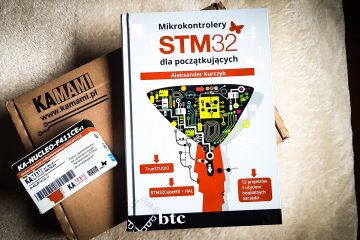
Examining the book “STM32 Microcontrollers for Beginners”
Some time ago, an interesting book “STM32 Microcontrollers for Beginners” from BTC Publishing appeared on the market. To my knowledge, this is the first widely released book that fully relies on the HAL libraries and is aimed at those who want to start their adventure with our favorite microcontrollers. For that reason, I was very curious to see what the author had to say.
(more…)STM32
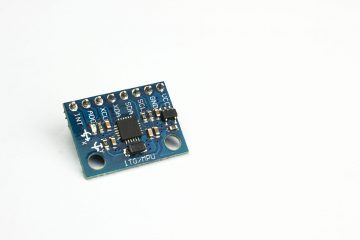
6 Degrees of Freedom with the MPU6050 on STM32
I remember when the Nokia N95 hit the market, which was a huge technological leap. It had a built-in accelerometer thanks to which, among other things, the interface would change orientation by itself. Today this probably doesn’t impress anyone anymore, but in 2007 an app with lightsaber sounds triggered by
(more…)STM32
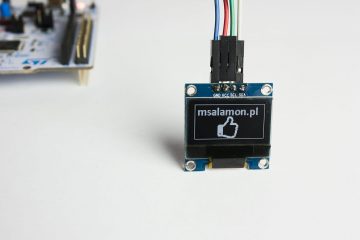
SSD1306 OLED Displays: I2C or SPI?
Many people rave about the beauty of OLED displays because there’s something amazing about them. Infinite contrast and high refresh rate are incredible advantages of this technology. On the market you can find plenty of tiny monochrome OLEDs in sizes from about 0.49″ up to roughly 4″. Their price has dropped significantly in recent years, making them wildly popular. Let’s see how to tame an SSD1306 OLED using an STM32!
(more…)STM32
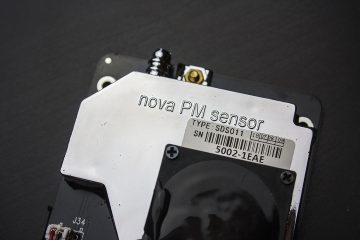
Measuring Air Quality with the SDS011
Winter is approaching, so the media will once again be loud about the smog prevailing over Poland. Moreover, the authorities probably have no intention of moving away from coal, so we have to cope with pollution somehow. As a result, air quality sensors have become popular in recent years, and today I’ll be looking at one of them.
(more…)STM32
Addressable WS2812B LEDs on STM32, Part 3
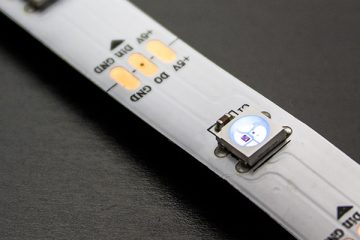
We have reached the end of the series on WS2812B addressable LEDs. At least for now. In this part, I will discuss splitting an LED strip into fully configurable and independent segments. This means that each segment can operate in a different mode, at a different speed, and have a different length. This gives huge possibilities to tailor it to your needs. Let’s go!
(more…)