Opublikowano przez Mateusz Salamon, temu

No More Multiplexing on GPIO! MAX7219 in Action, Part 2

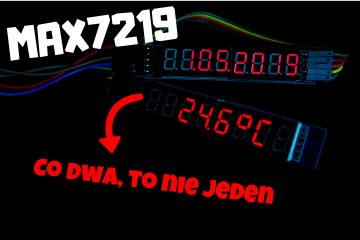
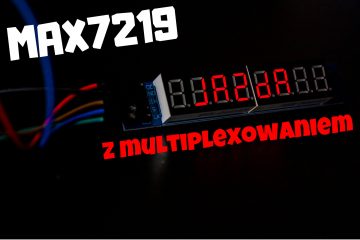
Recently we made a 7-segment display multiplex itself thanks to the magical MAX7219 chip. Today I’ll show you how these chips let you handle a theoretically infinite number of displays. We’re talking about the daisy-chain connection these wonderful chips offer. In a moment you’ll see how, without using more pins, you can connect and control as many displays as you want. Let’s get to it!

(more…)
Opublikowano przez Mateusz Salamon, temu

No More GPIO Multiplexing! MAX7219 in Action, Part 1

I remember how many years ago multiplexing an LED matrix was a nightmare for me. Geez… how badly I went through it. From today’s perspective I don’t understand my past self at all. It really isn’t as difficult as it seemed to me back then. Today it’s even simpler! We have specialized multiplexing chips designed for LED displays, and that’s beautiful. Let’s get cracking!

(more…)
Opublikowano przez Mateusz Salamon, temu

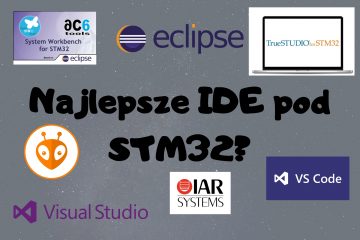
IDE or Not IDE – The 8 Best IDEs for STM32

Many beginners puzzle over what the best IDE for STM32 is. On the Internet, as is always the case, opinions are divided. Some will recommend an all-in-one tool costing thousands of dollars “because it’s the best and the others are junk.” Others will say that an IDE is an unnecessary tool and will send you to Notepad or something only slightly more advanced. There’s also a split between supporters of free and paid IDEs. So which is the best IDE for STM32? The answer isn’t simple… but

(more…)
Opublikowano przez Mateusz Salamon, temu Opublikowano przez Mateusz Salamon, temu

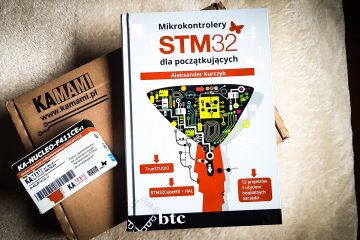
Examining the book “STM32 Microcontrollers for Beginners”

Some time ago, an interesting book “STM32 Microcontrollers for Beginners” from BTC Publishing appeared on the market. To my knowledge, this is the first widely released book that fully relies on the HAL libraries and is aimed at those who want to start their adventure with our favorite microcontrollers. For that reason, I was very curious to see what the author had to say.

(more…)
Opublikowano przez Mateusz Salamon, temu

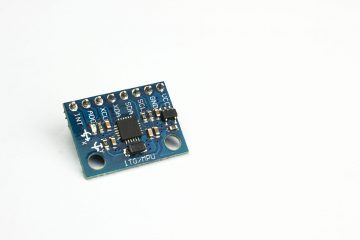
6 Degrees of Freedom with the MPU6050 on STM32

I remember when the Nokia N95 hit the market, which was a huge technological leap. It had a built-in accelerometer thanks to which, among other things, the interface would change orientation by itself. Today this probably doesn’t impress anyone anymore, but in 2007 an app with lightsaber sounds triggered by

(more…)
Opublikowano przez Mateusz Salamon, temu Opublikowano przez Mateusz Salamon, temu

SSD1306 OLED Displays: I2C or SPI?

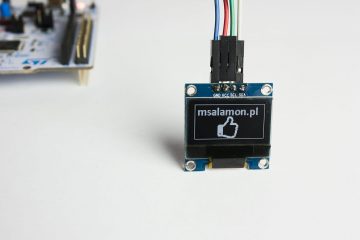
Many people rave about the beauty of OLED displays because there’s something amazing about them. Infinite contrast and high refresh rate are incredible advantages of this technology. On the market you can find plenty of tiny monochrome OLEDs in sizes from about 0.49″ up to roughly 4″. Their price has dropped significantly in recent years, making them wildly popular. Let’s see how to tame an SSD1306 OLED using an STM32!

(more…)
Opublikowano przez Mateusz Salamon, temu

Measuring Light Intensity Using STM32

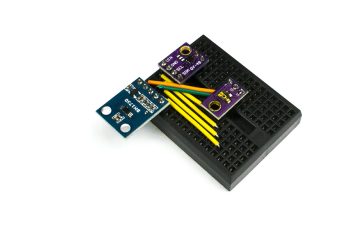
Measuring light intensity is common in our everyday life. Probably everyone has an auto dimming/brightening screen feature in their smartphone. It is based precisely on measuring the light intensity around the device. The measurement is performed continuously while the phone Read more

Opublikowano przez Mateusz Salamon, temu

Inexpensive HC-SR04 Ultrasonic Rangefinder

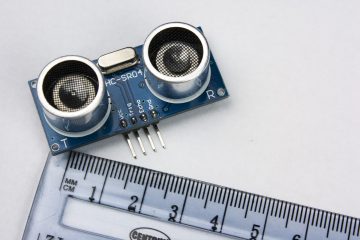
Distance measurement is used in everyday life, for example in parking sensors in cars. For robots, distance sensors help them survive a thicket of obstacles, e.g., so that a drone doesn’t smash its propellers against a pole or a wall. Let’s take a look at a very cheap HC-SR04 ultrasonic rangefinder – how it works and how to use it optimally.

(more…)